

For many men, erectile dysfunction is something they research quietly. Whether it follows prostate surgery, cancer treatment, or medications that haven't delivered the results you hoped for, you're not alone — and there are treatment options worth understanding.
Vacuum erection devices have been used in urology for over 30 years. The American Urological Association lists them as a first-line treatment option for erectile dysfunction in appropriate candidates. Yet many men have never heard of them, or only have a vague idea of how they work.
This guide explains the basics plainly: what a VED is, how it works, who uses one, and how to choose between the models available. It is not medical advice — start with a conversation with your urologist.
How does a vacuum erection device work?

A vacuum erection device (VED) is a non-drug treatment that helps create and maintain an erection using gentle suction. Because it works mechanically, it does not rely on hormones, nerve signals, or medication.
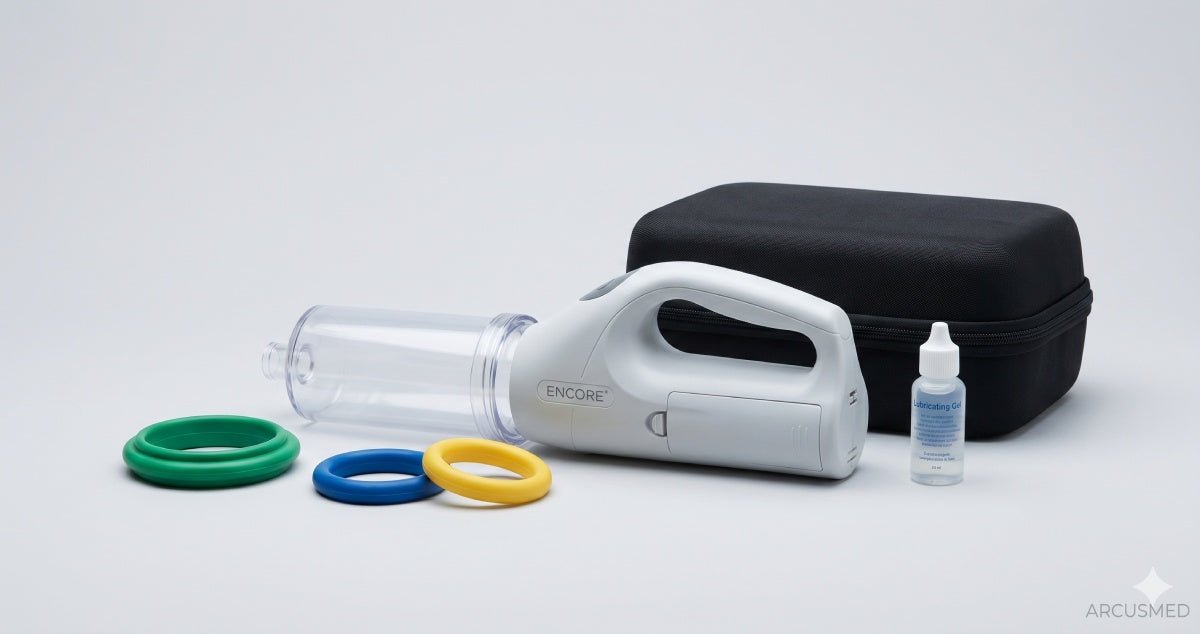
A VED has three parts:
• A clear plastic cylinder placed over the penis
• A pump — battery-powered or hand-operated — that removes air and creates gentle suction
• A constriction ring that slides to the base of the penis once erect, helping maintain blood flow after the cylinder is removed
The suction draws blood into the penile tissue, producing an erection. Once the erection is achieved, the constriction ring helps maintain it during sexual activity.
Do not leave the constriction ring in place for more than 30 minutes.
Who are VEDs typically recommended for?
Many men discover vacuum therapy while looking for alternatives to medication or while recovering from a medical procedure. These are some of the most common situations where a physician may recommend a VED:
• After prostate surgery: Nerve damage following radical prostatectomy is a common cause of erectile dysfunction. Many urologists recommend VED therapy as part of penile rehabilitation programs.
• After radiation therapy: VEDs are frequently used as part of post-radiation sexual rehabilitation protocols.
• Diabetes-related ED: Because VEDs work mechanically, they may be effective even when circulation or nerve-related issues contribute to erectile dysfunction.
• Men who prefer not to use oral medications: Vacuum therapy involves no systemic side effects and avoids drug interactions associated with some ED medications.
Always confirm with your urologist whether a VED is appropriate for your specific situation.
Battery-powered or manual — which is right for you?
Choosing between a manual and battery-powered system often comes down to convenience, comfort, and hand strength.
Manual pumps are operated by hand and generally have a lower price point. They work well for men who have good grip strength and prefer a straightforward design.
Battery-powered pumps create suction with the press of a button. They can be particularly helpful for men with arthritis, limited grip strength, or those recovering from surgery.
Encore deluxe battery and manual system — battery-powered for convenience, manual as a backup
Fully automatic systems require minimal effort during use.
Each system uses a constriction ring that wears out with use and should be replaced periodically. Replacement rings are available for the Osbon Esteem manual and automatic systems and for the Pos-T-Vac system.
If you're not sure which type best suits your needs, call us at 877-272-8763. Our team can help you compare options and answer questions.
What to expect when you start using one
The first few uses may feel unfamiliar, and that's completely normal.
Many men notice that a VED-assisted erection feels somewhat different from a natural erection. The penis may feel slightly cooler, and the angle of the erection may vary when the constriction ring is in place. These differences are expected and do not necessarily indicate a problem.
For post-surgical rehabilitation, some urologists recommend short daily sessions even before natural erections return. The goal is often to support healthy tissue oxygenation during recovery.
Results vary from person to person. Your physician can help set realistic expectations based on your health condition and treatment goals.
A note on lubricating jelly
Most men apply a small amount of water-based lubricant around the base of the cylinder before use. This helps improve the seal, reduces friction, and can make the process more comfortable.
Surgilube sterile surgical lubricant is fragrance-free, water-soluble, and widely used in clinical urology settings.
Avoid oil-based lubricants, as they can degrade constriction rings and other device components over time.
Explore Arcus Medical's ED pump range
Arcus Medical has supplied medical-grade vacuum erection devices for more than 20 years. Most models do not require a prescription, making them accessible for many patients who have already discussed treatment options with their physician.
If you have questions about product selection, call 877-272-8763 or email info@arcusmed.com. Our team is available to help you find a device that fits your needs and comfort level.
Disclaimer: This article is for educational purposes only and does not constitute medical advice, diagnosis, or treatment recommendation. Vacuum erection devices are medical devices. Always consult your urologist or physician before use, particularly following prostate surgery, cancer treatment, or if you take blood-thinning medications. Results vary by individual.
Published by the Arcus Medical Team | arcusmed.com
Share:
Traveling This Summer with Incontinence? How to Stay Confident and Prepared
Nighttime incontinence in men: causes, solutions, and how to sleep better